


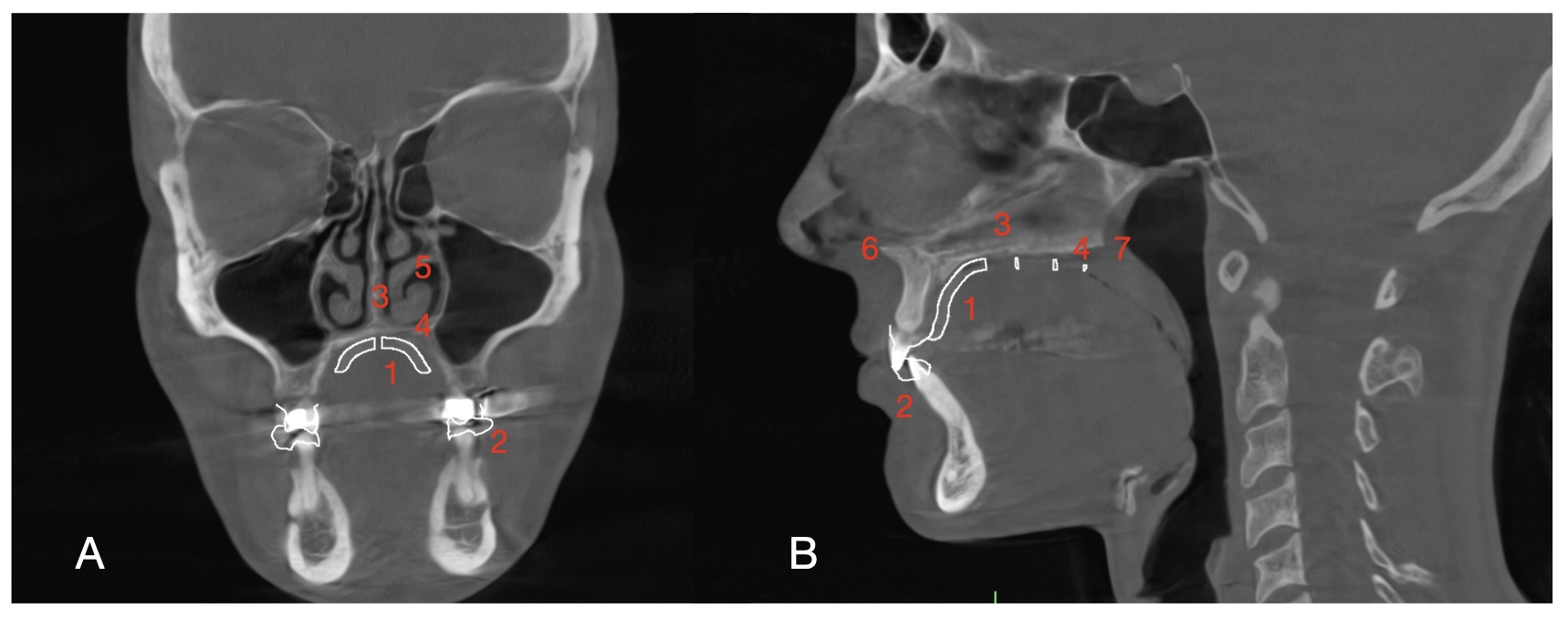
What Was the Goal of the Study?When adults undergo palate expansion to treat narrow jaws or breathing issues, there is sometimes an unwanted side effect where the upper jaw tips downward (rotates) during treatment. This study looked at whether a routine pre-treatment 3D X-ray (CBCT) could help orthodontists predict which patients are at risk for this downward tilt before starting expansion therapy.
How Was the Research Done?Researchers evaluated 80 adult patients who received Dr.Koval`s MARPE F.A.C.E.. The patients were divided into two groups based on their results: 15 patients who experienced downward jaw rotation ("cases") and 65 patients who did not ("controls"). The team then compared both groups' initial head measurements, age, and sex to see what set them apart before treatment.
What Did the Results Show?The biggest factor that predicted downward jaw rotation was the original angle of the patient's upper jaw (palatal plane) relative to the base of their skull. Patients whose upper jaw was naturally tilted steeper before starting treatment were significantly more likely to experience further downward tipping during expansion. In fact, every single degree of initial steepness increased the odds of this side effect by about 50–57%, regardless of the patient's age or biological sex.
What Does This Mean for You as a Patient?By measuring this specific jaw angle on your initial X-ray, your doctor can figure out ahead of time if your facial structure makes you more prone to downward jaw rotation. This allows your orthodontic team to better plan your treatment, manage potential side effects early, and design an approach tailored specifically to your facial anatomy.